
There are two essential things that you need to know about your body.
1. Which of the three genetic body types are you?
2. What are your hormonal imbalances?
Both of these all important factors contribute strongly towards why you may have always carried fat around your belly, why you have never been able to shift fat from your legs and bum, why you have always been better at sprints rather than long runs and why your friend lost a shed load of weight on a fad diet and you didn’t.
Every body type is different (both genetically and hormonally). It is for this reason that for you to lose weight, drop fat or change your body shape long-term, you absolutely must understand a little bit about your genetic and hormonal profile. Armed with this information, you can ensure that you have your best personal fat loss plan for you, for life.
Having worked closely with my personal clients for nearly 10 years, there are some undeniable trends which I have seen over and over again when dealing with certain body types. In this short article, I plan to reveal some of the secrets behind how to identify your body type, and to help you address any hormonal imbalances which may be the reason why your fat is deposited where it is.
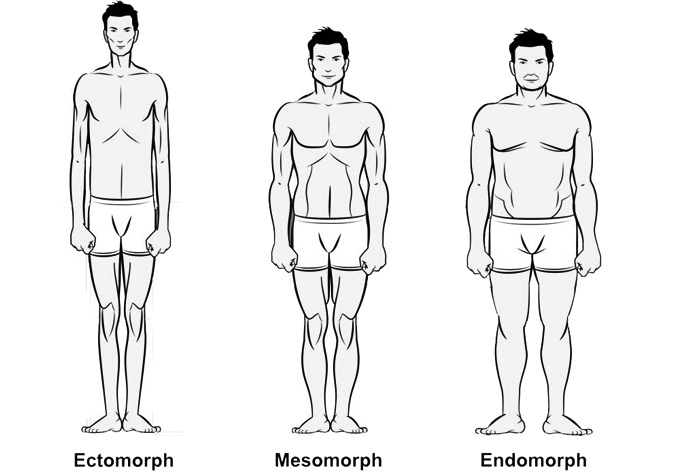
1. Which of the three genetic body types are YOU? So let’s kick off with looking at the genetic side of things. To put it simply, there are three different genetic body types, all of which respond differently to exercise and nutrition programmes.
Step one in your quest for long-term success is to identify which type you are so you can eliminate certain programmes and nutrition plans which definitely do NOT suit you. You are born with your type and however much training you do, you cannot change it.
Whichever type you are, you can of course get leaner, drop weight or build muscle, but the bottom line remains the same: you are born with and will live your life as the same body type. The trick is to understand how your type responds best to food and exercise.
If you know this, you are in the driving seat to achieve long-term results. The three genetic body types are as follows:
ECTOMORPH – These types are generally the skinny ones who are likely to be good at long distance running rather than strength-based activities. These types have long slim limbs with low levels of body fat. They can generally eat what they like and always appear slim.
Gaining weight for these types can sometimes be an issue and they often rely on resistance training and high calorie diets to stay at a healthy weight. Male examples include: Mo Farah, Bruce Lee, Brad Pitt and David Beckham Female examples include: Kate Moss and Naomi Campbell
MESOMORPH – Mesomorphs have more muscle than ectomorphs. They are the ones who have broader shoulders, slim hips and are usually quite lean. These types have more of an all round level of fitness. Mesomorphs can gain and lose weight with little difficulty. They usually possess muscular bodies and are able to build size or increase definition easily. Male examples include: Jonny Wilkinson and Chris Hoy Female examples include: Jessica Ennis, Beyoncé, Denise Lewis
ENDOMORPH – Endomorphs are a heavier build with generally a higher level of body fat than the other types. These types are better designed for strength and short sharp bursts rather than steady state cardio. These types will have to work harder to shift fat than the other two types. Male examples include: Russell Crowe, John Goodman, Jack Black Female examples include: Jennifer Lopez, Kate Winslet, Oprah Winfrey
Identifying which body type profile fits you best… The reality of the situation is that you are likely to be most similar to one type but have traits from another. I have found very few pure examples while working with a huge variety of people.
All of my best results as a personal trainer have come from establishing which body type a client shares the most traits with and incorporating this into an individual programme. Understanding your genetic body type should influence the following factors: How much weight training is included in your exercise plan How much cardio is included in your exercise plan The reps, sets, rest periods included in your exercise plan The amount and type of carbohydrates included in your daily meals Without this basic level of information, it is unlikely that you will be maximizing your time in the gym.
I have found a few rule-breakers in my time as a PT, but they are very few and far between. There are very clear trends in the way in which each body type responds to specific exercise and nutrition protocols. If you are finding that you’re hitting a wall with your fat loss and fitness levels, it’s certainly worth ensuring that you’re following the right programme for your genetic body type.
2. What are YOUR hormonal imbalances? From a hormonal perspective, it is important that you have an overview of how hormones relate to fat storage and what you need to do about it. In a nutshell, hormones play a big part in where and why you store fat in specific places. Your hormonal imbalances should play a vital role in the design of your best-suited nutrition plan.
Common hormonal imbalances include the over-production of insulin and cortisol. Eating too many bad carbohydrates can trigger both of these hormones. Over-consumption of these foods will result in the accumulation of body fat around the abdominal area. Endomorphs in particular are prone to this as these types generally have a lower tolerance to carbohydrates than ectomorphs and mesomorphs.
When I design nutrition plans for my clients, this is one of the most important areas. One of the most effective tools I have used to cut down the carbohydrate intake while making sure that clients have enough carbs for energy is to apply the following formula:
On days of exercise, include a low glycaemic complex carbohydrate in your post workout meal. On days of non-exercise, limit your carbohydrate intake to green vegetables and dark skinned fruit.
Choosing the right carbohydrates is half the battle. On the days of exercise, having a serving of sweet potatoes or brown rice after a workout are great options. In fact these are my two favorite complex carb options. Others include quinoa and butternut squash.
On days of non-exercise, you should be having green vegetables with each meal. My favorites for fat loss are cabbage, broccoli, kale and green beans. Equally, 1 or 2 servings of dark skinned fruits are a good option. These include blueberries, blackberries and cherries.
Other hormones like oestrogen and testosterone need some attention too. All too often, our lifestyles dictate that for men, testosterone levels are low and for women natural oestrogen levels drop off. Both of these factors make weight loss a seemingly impossible task. Some of the tell-tale signs include body fat accumulation around the back of the arms, the chest and the buttocks.
Your success lies in the right balance of nutrients through food coupled with the right balance of weights and cardio for your body type/hormonal profile. Whichever genetic body type you are and whatever your hormonal profile, there is a simple combination of food and exercise which will allow you to burn more fat, improve your strength quicker and reach your desired body shape at the fastest possible rate. Once you know this, your goal is as good as achieved!


"My first new year’s resolution for 2011 was to reduce my body fat levels. Upon" READ MORE

"In eight weeks Dave Fletcher reduced my bodyfat by 5.8% to reach my lowest ever" READ MORE

"I first contacted Dave last year when I found myself wanting to push myself further" READ MORE

"I originally contacted Dave Fletcher because I had heard about his method of achieving results" READ MORE